
A cat water intake calculator estimates how much water a cat needs each day based on weight, age, diet type, activity level, living environment, climate, and health status. It also shows how to read the result and how to check what a cat is actually drinking against that estimate. Use the calculator below, then read on for a full breakdown of daily water needs, the factors that change them, and how to measure real intake at home.
How Much Water Should a Cat Drink Each Day?
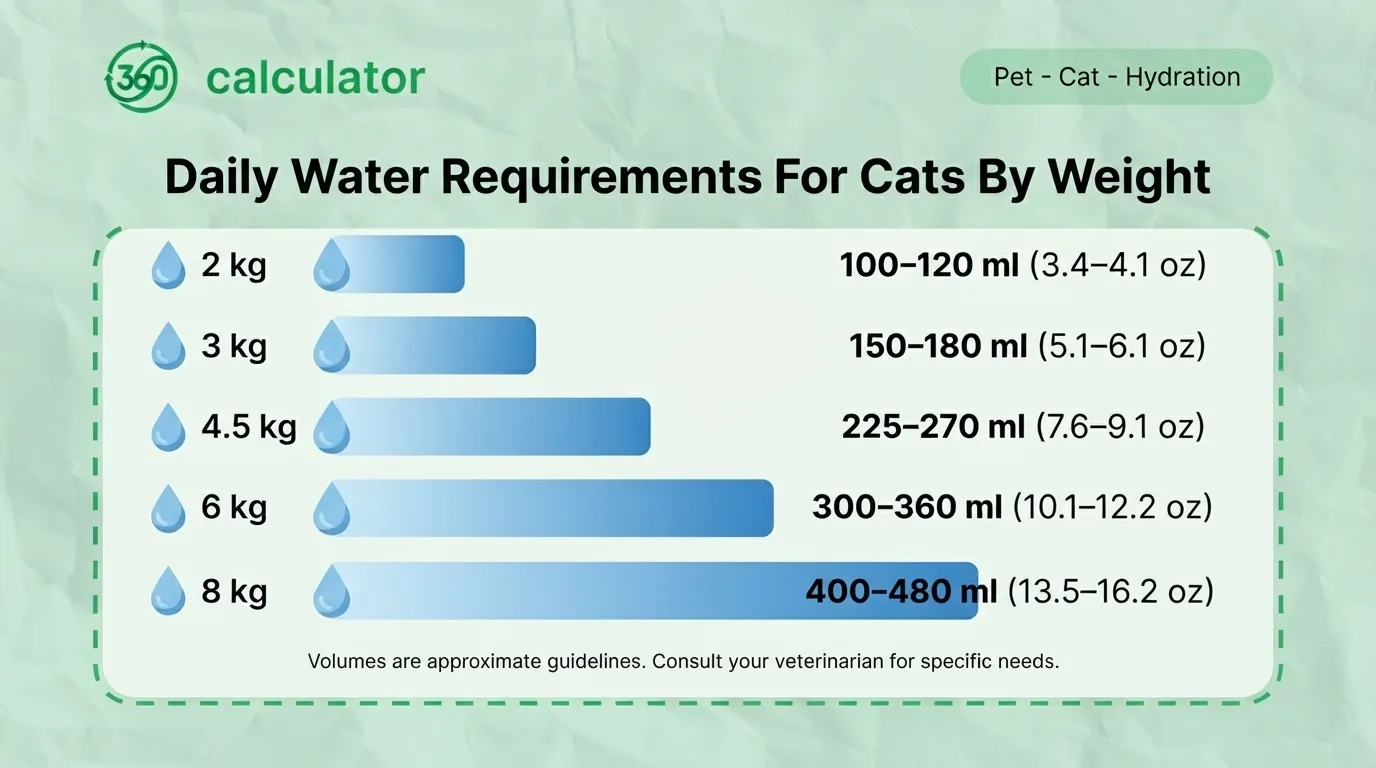
Most healthy cats need between 50 and 60 ml of water per kilogram of body weight each day, or roughly 3.5 to 4.5 ounces per 5 pounds. This total includes water from food and water taken directly from a bowl, not drinking alone. A 4.5 kg (10 lb) cat typically needs about 225 to 270 ml of water a day, close to one cup, based on guidance from the Cornell Feline Health Center.
Cat Weight | Daily Water Range (ml) | Daily Water Range (oz) |
2 kg (4.4 lb) | 100 to 120 ml | 3.4 to 4.1 oz |
3 kg (6.6 lb) | 150 to 180 ml | 5.1 to 6.1 oz |
4.5 kg (10 lb) | 225 to 270 ml | 7.6 to 9.1 oz |
6 kg (13.2 lb) | 300 to 360 ml | 10.1 to 12.2 oz |
8 kg (17.6 lb) | 400 to 480 ml | 13.5 to 16.2 oz |
What Factors Change How Much Water a Cat Needs?
The baseline range above shifts depending on several factors:
• Body weight: heavier cats need more total water.
• Age group: kittens and senior cats have different needs than adult cats.
• Diet type: wet, dry, or raw food changes how much water comes from meals.
• Activity level: active or outdoor cats lose more water through movement.
• Living environment: indoor cats usually need less than cats with outdoor access.
• Climate: hot weather raises water loss through panting.
• Health status: some medical conditions increase water needs substantially.
• Pregnancy or nursing: reproductive cats need much more water than usual.
How Does Age Affect a Cat's Water Needs?
Kittens have faster metabolisms and are more active relative to their size, so they need proportionally more water, roughly 2 to 4 ounces per pound of body weight each day. Adult cats generally follow the standard baseline range. Senior cats often have reduced kidney function, which makes consistent access to water more important, since older cats are more prone to dehydration and related kidney problems.
Life Stage | Typical Water Need | Key Consideration |
Kitten (under 1 year) | 2 to 4 oz per lb daily | Higher metabolic rate, faster growth |
Adult (1 to 7 years) | 3.5 to 4.5 oz per 5 lb | Standard baseline applies |
Senior (8+ years) | Same baseline, closer monitoring | Higher risk of kidney decline |
How Do Activity Level and Climate Affect a Cat's Water Needs?

Highly active cats, including those with outdoor access, can need 15 to 30 percent more water than a sedentary indoor cat because movement increases fluid loss. Hot weather has an even larger effect, raising water needs by as much as 50 percent due to panting and heat related fluid loss. A cat that is both very active and living in a hot climate should be watched closely for higher water needs.
Condition | Added Water Need |
High activity or outdoor access | 15 to 30 percent more |
Hot climate | Up to 50 percent more |
Low activity, moderate climate | Baseline range applies |
How Do Health Conditions Like Kidney Disease or Diabetes Change Water Needs?
Cats with chronic kidney disease, diabetes, hyperthyroidism, or urinary tract issues often need 50 to 60 percent more water than a healthy cat of the same size, since these conditions cause the body to lose more fluid through urine. These figures are general guidance only. A cat with a diagnosed condition should follow water intake guidance from its veterinarian rather than relying on a calculator estimate alone.
Health Status | Example (5 kg cat) | Approximate Increase |
Healthy | 250 to 300 ml daily | Baseline |
Kidney disease | 375 to 450 ml daily | About 50 percent more |
Diabetes | 400 to 480 ml daily | About 60 percent more |
How Does Wet Food, Dry Food, or Raw Food Change a Cat's Water Needs?

Dry food contains roughly 6 to 10 percent moisture, so cats fed only dry food need to drink nearly all of their daily water requirement from a bowl. Wet canned food contains roughly 70 to 80 percent moisture, and raw food is similar, around 65 to 75 percent, so cats on wet or raw diets get most of their hydration from meals and drink very little on top of that. This is why the calculator asks for diet type before estimating how much extra water a cat should drink.
Diet Type | Typical Moisture Content | Extra Drinking Needed |
Dry food only | 6 to 10 percent | Nearly all daily requirement |
Wet food only | 70 to 80 percent | Small additional amount |
Raw food | 65 to 75 percent | Small additional amount |
Mixed diet | Varies by ratio | Moderate additional amount |
How Do You Calculate a Cat's Daily Water Requirement?
There are two methods commonly used to estimate a cat's daily water need.
Method one, the weight based method: multiply body weight in kilograms by 50 to 60 ml, then subtract the water already supplied by food, based on the grams fed and the moisture percentage of that food. What remains is the amount the cat should drink directly.
Method two, the calorie based method: some veterinary sources calculate daily water in milliliters as roughly equal to daily kilocalorie need, using the formula bodyweight in kilograms multiplied by 30, plus 70, then multiplied by 1.2 for a healthy neutered adult cat. This method ties water need to energy need rather than weight alone.
The calculator on this page uses the weight based method, since it is simpler to apply with common food label information.
Where Do You Find the Moisture Percentage of Cat Food?
The moisture percentage is listed under the Guaranteed Analysis or Analytical Constituents section on the food packaging or the brand's website. If this figure is not available, a reasonable fallback is 8 percent for dry food and 80 percent for wet food. Contacting the food manufacturer directly is another option if the label does not list it.
How Do You Use the Cat Water Intake Calculator on This Page?
Enter these details into the calculator above:
• Body weight and preferred unit, pounds or kilograms.
• Age group: kitten, adult, or senior.
• Diet type: dry food, wet food, or a mix.
• Activity level: low, moderate, or high.
• Living environment: indoor only or outdoor access.
• Climate: cold, moderate, or hot.
• Health status: healthy or a specific condition if known.
• Amount and moisture percentage of dry and wet food fed daily.
After entering these values, the calculator shows the total daily water requirement and the additional amount the cat should drink beyond what it gets from food.
What Does the Calculator Result Actually Mean?
The number shown is an estimate, not a fixed target, and normal day to day variation should be expected. It is not a substitute for veterinary guidance, especially for kittens, pregnant or nursing cats, or cats with a diagnosed health condition, even though the calculator includes options for these situations. The result is a starting point for comparison, not a diagnosis.
How Do You Measure How Much Water Your Cat Is Actually Drinking?
To check how much your cat actually drinks, measure the water in its bowl at the start of a 24 hour period using a measuring jug, or weigh it using a kitchen scale, since 1 gram of water equals 1 ml. Measure what remains after 24 hours and subtract to find how much was drunk. Since intake can vary daily, repeating this over about a week and averaging the results gives a more reliable figure to compare against the calculator's estimate.
Can Smart Water Fountains Track a Cat's Water Intake Automatically?
Some app connected water fountains can log how much water a cat drinks, how many times it visits the fountain, and how long each visit lasts. This offers a more convenient alternative to manual jug measuring for owners who want ongoing tracking rather than a one week check. It is a helpful option, not a requirement, for monitoring hydration over time.
When Does a Cat's Water Intake Signal a Health Problem?
Drinking noticeably less than the calculated range can point toward dehydration, while drinking noticeably more, especially alongside other symptoms, can point toward an underlying condition such as kidney disease, diabetes, or hyperthyroidism. The sections below cover what to check for both directions, along with related feeding and life stage topics that affect a cat's water needs.
How Do You Know If Your Cat Is Dehydrated?
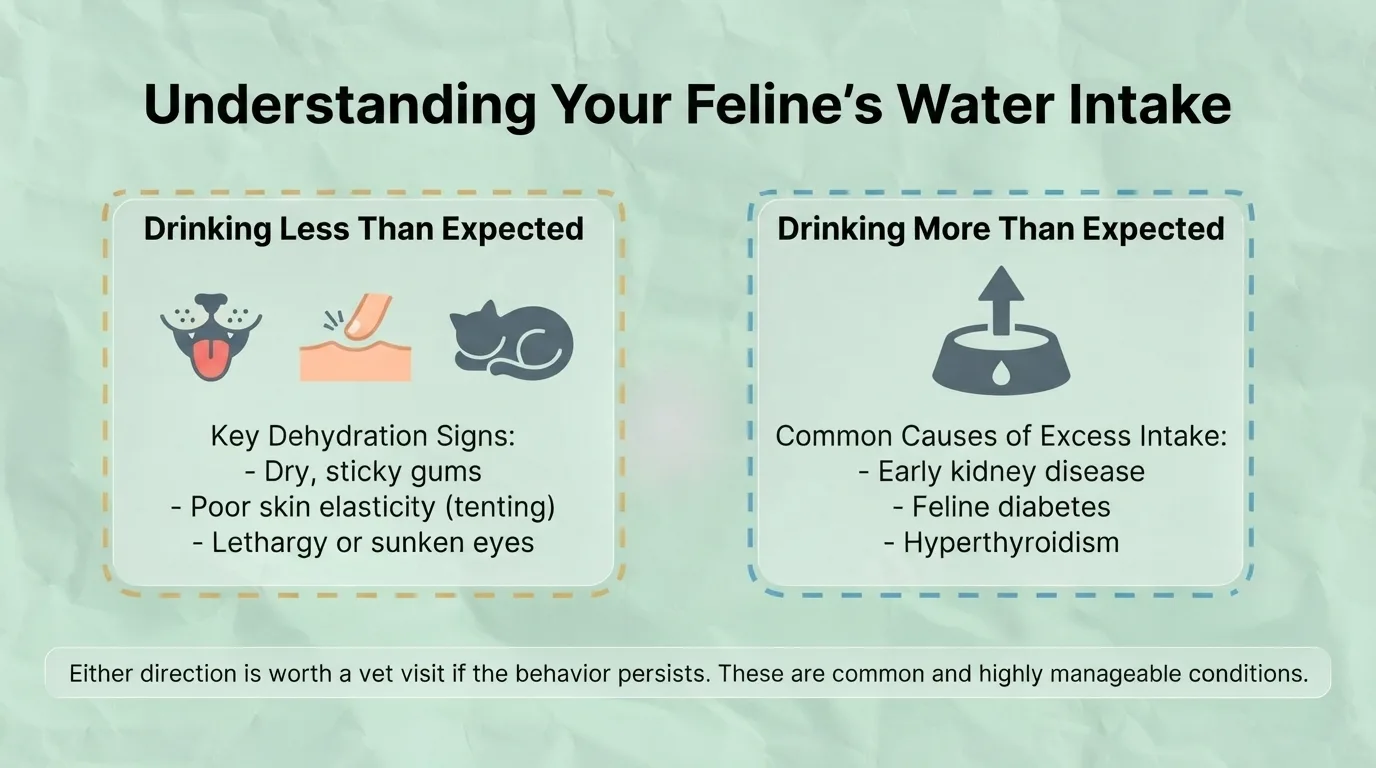
If the calculator result suggests your cat should be drinking more than it appears to, run through the cat dehydration signs guide for the full checklist, or use the quick version here. Gently lift the skin between the shoulder blades: skin that snaps back quickly suggests good hydration, while skin that returns slowly may indicate dehydration, though this test can be less reliable in older or overweight cats. Dry or tacky gums, sunken eyes, lethargy, reduced appetite, and unusually dark or concentrated urine are other signs worth watching for.
Why Is Your Cat Drinking More Water Than Expected?
If your cat is drinking more than the calculator suggests, this may point to polydipsia, generally defined as drinking more than about 100 ml per kg of body weight on a dry diet, or 50 ml per kg on a wet diet. The most common causes are chronic kidney disease, diabetes, and hyperthyroidism.
Limiting a cat's water access when it is drinking more than usual is not advised and can make an underlying condition worse, so a veterinary visit is the right next step. The cat kidney disease and polydipsia guide walks through the diagnostic process in more depth.
How Can You Encourage a Cat to Drink More Water?

If the calculator shows your cat should be drinking more, a few changes can help. Use wide, shallow bowls placed away from food and litter to avoid whisker fatigue. Running water from a pet fountain can raise intake by 30 to 50 percent compared to a still bowl.
Filtered water, ceramic or stainless steel bowls instead of plastic, and a small amount of unsalted tuna water or low sodium broth can also make water more appealing. The best cat water fountains and bowls guide compares specific models and setups if you want to go further.
What Type of Food Is Better for Hydration, Wet, Dry, or Raw?
For hydration specifically, wet and raw food have a clear advantage over dry food because of their higher moisture content, which can help cats prone to urinary tract disease or kidney issues. Dry food requires more deliberate water encouragement to make up the difference. If you want to work out exact feeding amounts and moisture levels for your cat's weight, the cat food calculator breaks that down by diet type.
How Much Water Does a Pregnant or Nursing Cat Need?
Pregnant and lactating cats can need roughly 2 to 3 times the normal water intake to support fetal development or milk production. Fresh water should always be available and easy to reach, since restricted access during this period can affect both the mother and her kittens. The cat pregnancy calculator covers the full care timeline stage by stage.
How Much Water Should a Kitten or Senior Cat Drink?
Kittens generally need about 2 to 4 ounces of water per pound of body weight daily due to their faster metabolism, while senior cats need closer monitoring because age related kidney decline can affect both water needs and the ability to conserve it. Feeding schedules and growth milestones by age are covered in the cat age calculator.
How Does Body Weight and Daily Calorie Need Relate to a Cat's Water Intake?
As mentioned earlier, some veterinary sources calculate water needs from a cat's daily kilocalorie requirement, since both scale together with body weight and activity level. A cat with a higher calorie need generally has a higher water need as well, and running the numbers through the cat calorie calculator shows how that plays out based on your cat's weight and body condition.
Could a Sudden Increase in Thirst Point to Poisoning or Toxicity?
A sudden, unexplained rise in water intake alongside symptoms like vomiting or lethargy can, in some cases, be an early sign of poisoning, such as antifreeze exposure, and should prompt urgent veterinary contact rather than waiting to see if it passes. This is only one possible cause among several, and the cat toxicity calculator lists the more common substances and their symptoms.
Frequently Asked Questions
How much water should a cat drink daily?
Most healthy cats need about 50 to 60 ml per kg of body weight a day, including water from food.
Does wet food count toward my cat's water intake?
Yes. Wet food is about 70 to 80 percent water and covers most of a cat's daily hydration needs.
How can I tell if my cat is dehydrated?
Check skin elasticity, gum moisture, and energy levels. Slow skin snap back and dry gums are common signs.
Is it normal for my cat to drink a lot more water suddenly?
No. A sudden increase can point to kidney disease, diabetes, or another condition, so a vet visit is recommended.
How can I get my cat to drink more water?
Try a pet fountain, multiple wide shallow bowls away from food and litter, and fresh water changed daily.