

A dog pregnancy calculator determines the whelping date by adding 63 days to the breeding date, as the average canine gestation period spans 63 days from conception according to the American Kennel Club Canine Health Foundation 2023. The normal gestation range extends from 58 to 72 days, requiring veterinary confirmation through ultrasound which achieves 99.3% accuracy by day 28 as documented by the Journal of Veterinary Medical Science University of Tokyo 2022. Dog pregnancy progresses through three distinct trimesters involving embryo implantation, fetal development, and pre-labor preparation stages. Veterinary care timing includes initial confirmation visits, mid-pregnancy monitoring, and pre-whelping examinations to track puppy development and identify potential complications.
How long are dogs pregnant in days?
Dogs are pregnant for an average of 63 days from ovulation to delivery. The normal gestation period for dog pregnancy ranges from 58 to 72 days depending on the exact ovulation timing. The American Kennel Club Canine Health Foundation 2023 study confirms the 63-day average across all breed sizes with normal biological variance of approximately 5 days in either direction.
The gestation period calculation depends on accurate identification of the breeding date and ovulation timing. Ovulation may occur 2 to 3 days after the breeding date in some dogs. This timing variance explains why some litters arrive at day 58 while others deliver at day 68. Veterinarians measure gestation period from ovulation rather than breeding date for precise whelping date prediction.
Breed size doesn't significantly alter the average 63-day gestation period. Small breeds, medium breeds, and large breeds all follow the same biological timeline from ovulation to labor. Litter size impact on gestation length remains minimal according to Cornell University College of Veterinary Medicine 2023 research. Single-puppy pregnancies and large litters both typically deliver within the standard 58 to 72 day window.
The breeding date serves as the reference point for most dog pregnancy calculators. Add 63 days to the breeding date to estimate the whelping date. Confirm pregnancy and refine the due date through ultrasound confirmation between day 21 and day 25 of the gestation period. Veterinary care includes monitoring throughout all pregnancy stages to track proper puppy development and maternal health.
How do you calculate a dog's due date from breeding date?
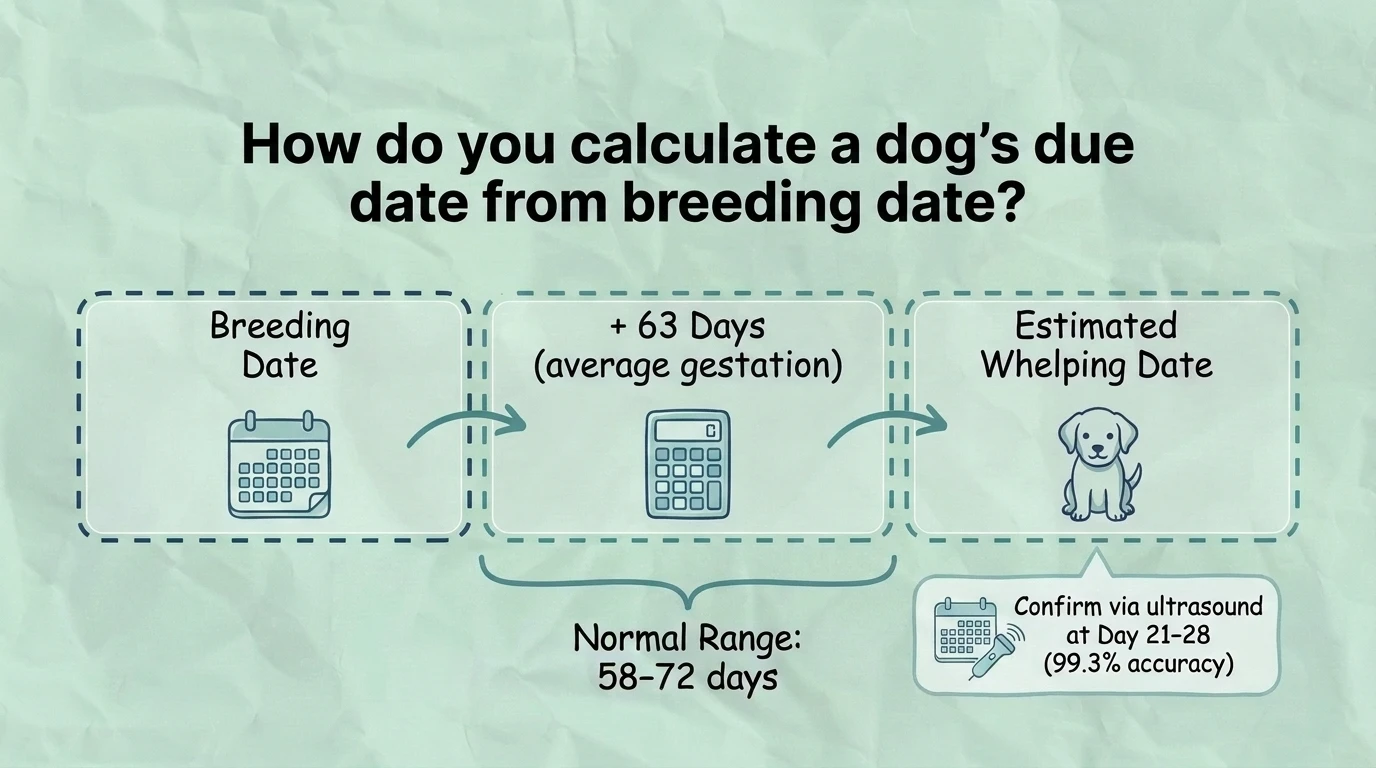
Add 63 days to the breeding date to calculate the whelping date. The 63-day average gestation period represents the standard timeframe from ovulation to delivery according to the American Kennel Club Canine Health Foundation 2023.
Record the breeding date or tie date from successful mating.
Add 63 days to the breeding date using the dog breeding calculator above.
Account for a normal range of 58-72 days from the breeding date.
Verify accuracy with veterinary ultrasound confirmation at day 28 with 99.3% accuracy per Cornell University College of Veterinary Medicine 2023.
Mark day 45-50 for puppy movement detection and final trimester monitoring.
What are the three trimesters of dog pregnancy?
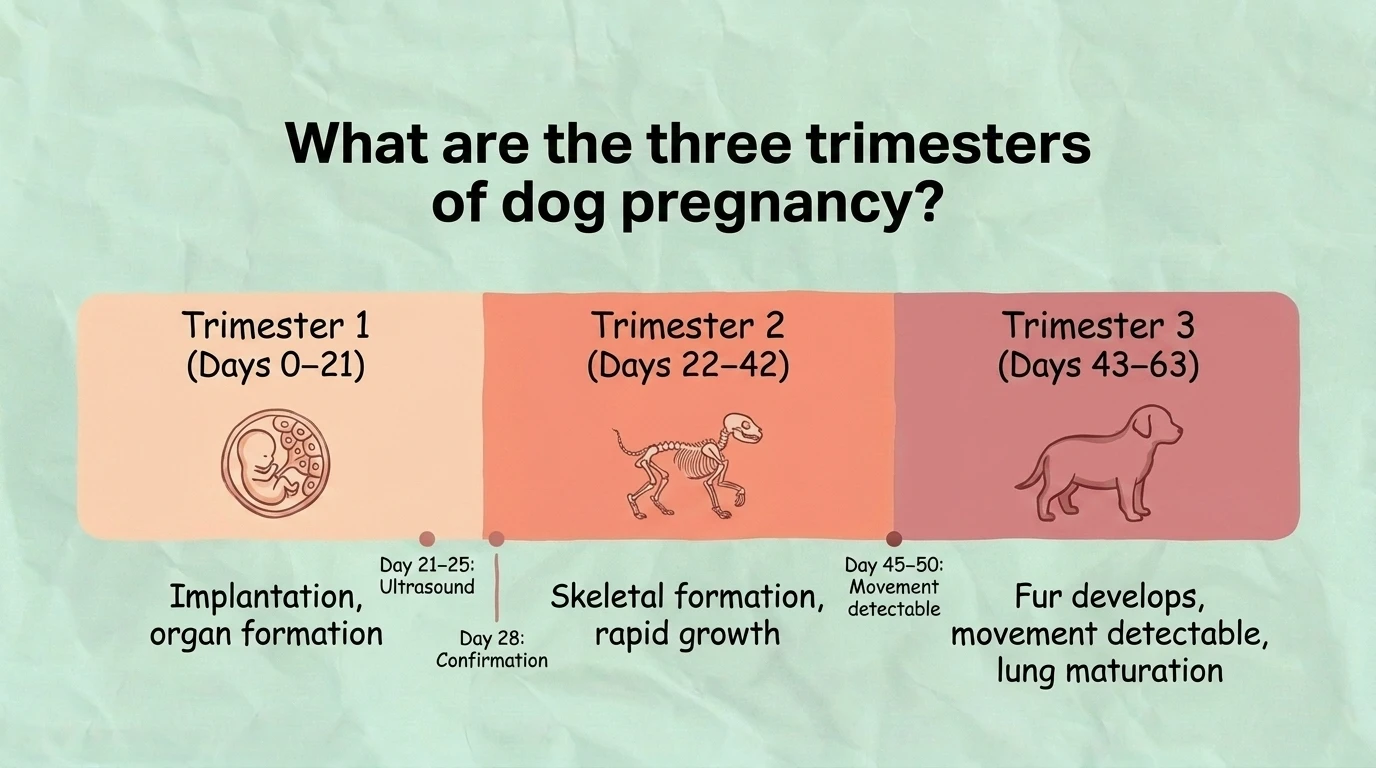
Dog pregnancy divides into three equal 21-day periods with distinct puppy development phases. Each trimester of the 63-day gestation period marks critical milestones in embryonic formation, fetal growth, and pre-labor preparation requiring specific veterinary care and nutritional adjustments.
Trimester (Days) | Development Milestones | Physical Changes | Care Requirements |
|---|---|---|---|
First (Days 0-21) | Embryo implantation, organ formation begins, neural development | Minimal visible changes, possible morning sickness | Normal diet, avoid medications, reduce strenuous activity |
Second (Days 22-42) | Skeletal structure forms, gender determination, rapid fetal growth | Abdominal enlargement, increased appetite, nipple darkening | Increase food by 25-50%, ultrasound confirmation day 28 |
Third (Days 43-63) | Puppy fur develops, movement detectable day 45-50, lung maturation | Significant weight gain, nesting behavior, milk production | High-calorie puppy food, prepare whelping area, monitor temperature |
Regular veterinary monitoring throughout each trimester confirms healthy progression through pregnancy stages and identifies potential complications early.
When should a pregnant dog see a veterinarian?
A pregnant dog should have the first veterinary visit on day 21-25 after breeding for ultrasound confirmation of pregnancy. Veterinary care during dog pregnancy includes ultrasound examination showing 99.3% accuracy by day 28 according to the Journal of Veterinary Medical Science University of Tokyo 2022. The second prenatal checkup occurs on day 45-50 for x-ray imaging to determine litter size and assess puppy skeletal development. A final veterinary care appointment should happen 7 days before the expected whelping date to screen for complications and confirm health status of the pregnant dog.
What are the signs a dog is going into labor?
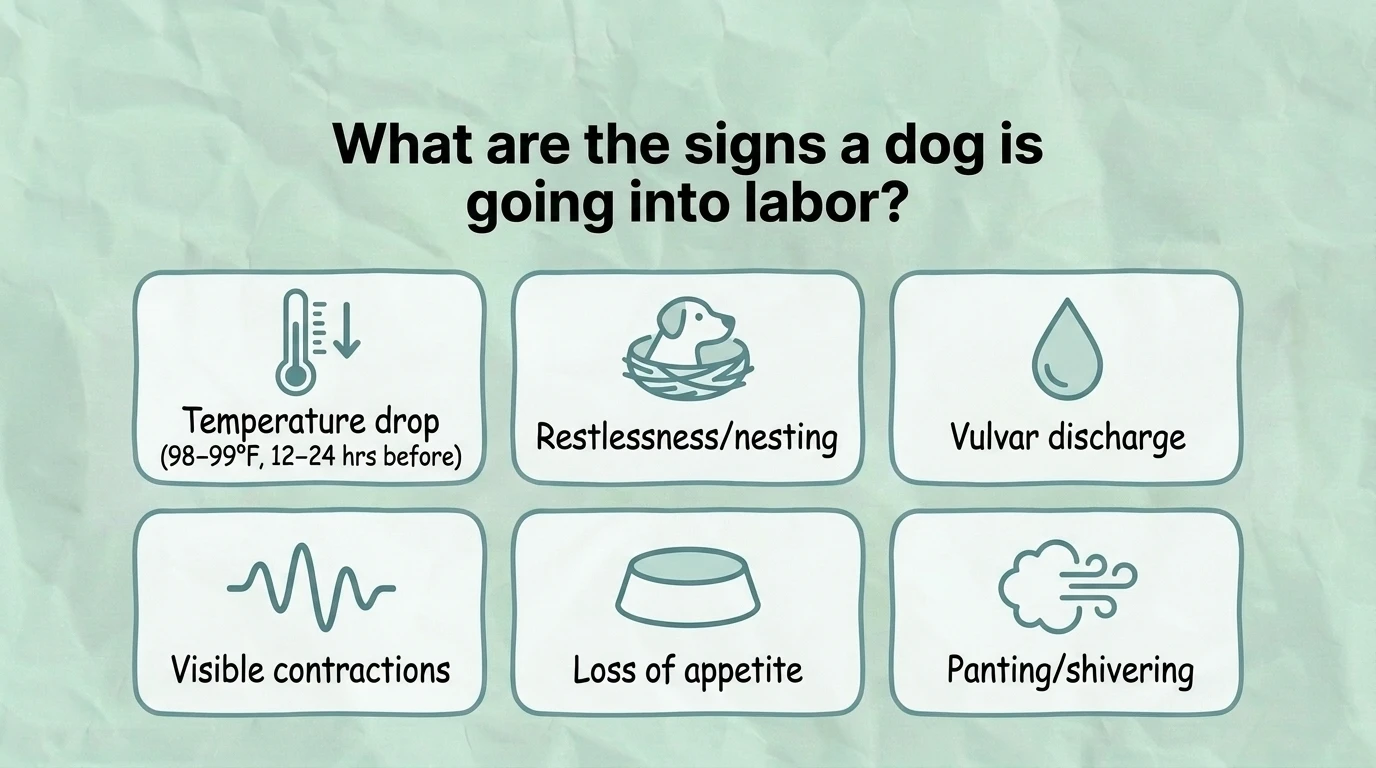
Temperature drop to 98-99°F occurs 12-24 hours before labor begins, according to American Veterinary Medical Association 2023 research showing rectal temperature drops from normal 101-102°F. Monitor for these labor signs:
Rectal temperature drop below 100°F signals imminent delivery within 24 hours
Restlessness and nesting behavior increases as whelping approaches
Clear or straw-colored discharge appears from vulva
Visible abdominal contractions begin during active labor
Loss of appetite occurs 12-24 hours before delivery
Panting and shivering intensifies as first stage labor progresses
How accurate are dog pregnancy calculators?
Dog pregnancy calculators are accurate within 2-3 days when the precise breeding date is known. The American Kennel Club Canine Health Foundation 2023 confirms calculators reliably predict whelping dates by adding 63 days to confirmed conception. Accuracy decreases when multiple breeding dates occur or ovulation timing remains uncertain. Breed size doesn't significantly affect calculator precision according to Cornell University College of Veterinary Medicine 2023. Dogs with documented single breeding events show the highest prediction accuracy.
When can you feel puppies move in a pregnant dog?
Puppy movement becomes detectable through abdominal palpation around day 45-50 of gestation. The Journal of Veterinary Medical Science University of Tokyo 2022 documents fetal movement as reliably palpable during the final trimester. Gentle pressure on the dog's abdomen reveals distinct kicks and position shifts. Experienced breeders detect movement earlier than first-time dog owners. Movement frequency increases as whelping date approaches and puppies grow larger within the uterus.
What should a pregnant dog eat during each trimester?
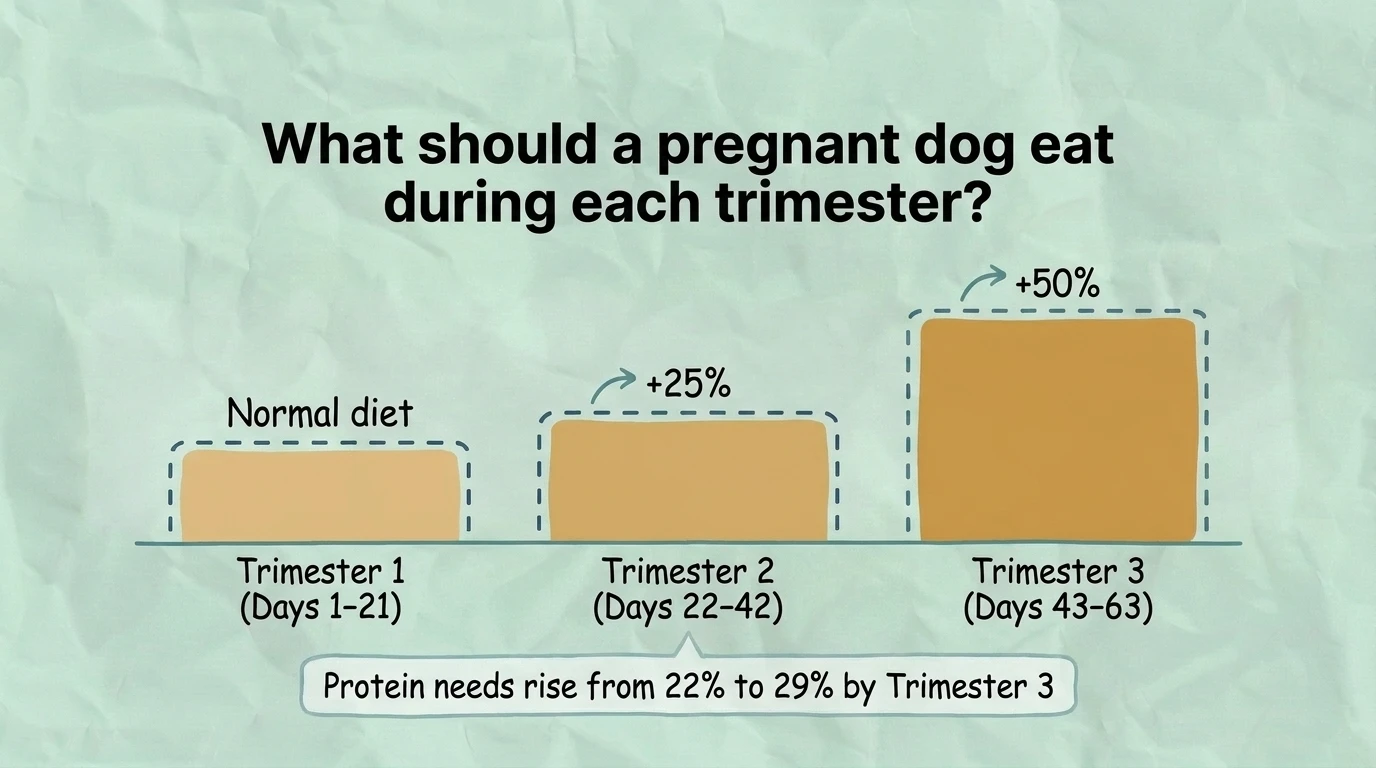
Pregnant dogs require normal diet during first trimester (days 1-21), 25% increase during second trimester (days 22-42), and 50% increase during third trimester (days 43-63) according to American Veterinary Medical Association 2023. Prenatal nutrition adjustments support puppy development without maternal weight complications. Caloric requirements escalate as fetuses grow exponentially in final trimester. Protein needs increase from 22% to 29% minimum in third trimester based on Cornell University College of Veterinary Medicine 2023 research. Transition to high-quality puppy food at day 42 provides concentrated nutrients for milk production. Calcium supplementation requires veterinary approval to prevent eclampsia or developmental issues.
Can dogs deliver puppies before 63 days?
Yes, healthy deliveries occur between 58-63 days, but earlier than 58 days risks puppy survival according to Theriogenology Journal UC Davis 2022. Premature delivery before day 58 results in underdeveloped lungs and temperature regulation failure. Breed size correlation shows smaller breeds deliver closer to 58 days while larger breeds approach 63 days. Gestation variance of 4-5 days remains normal without intervention. Early labor causes include uterine infection, trauma, or hormonal imbalances requiring immediate veterinary assessment. Veterinary intervention with incubation support increases premature puppy viability when delivery occurs days 56-58.
What complications can occur during dog pregnancy?
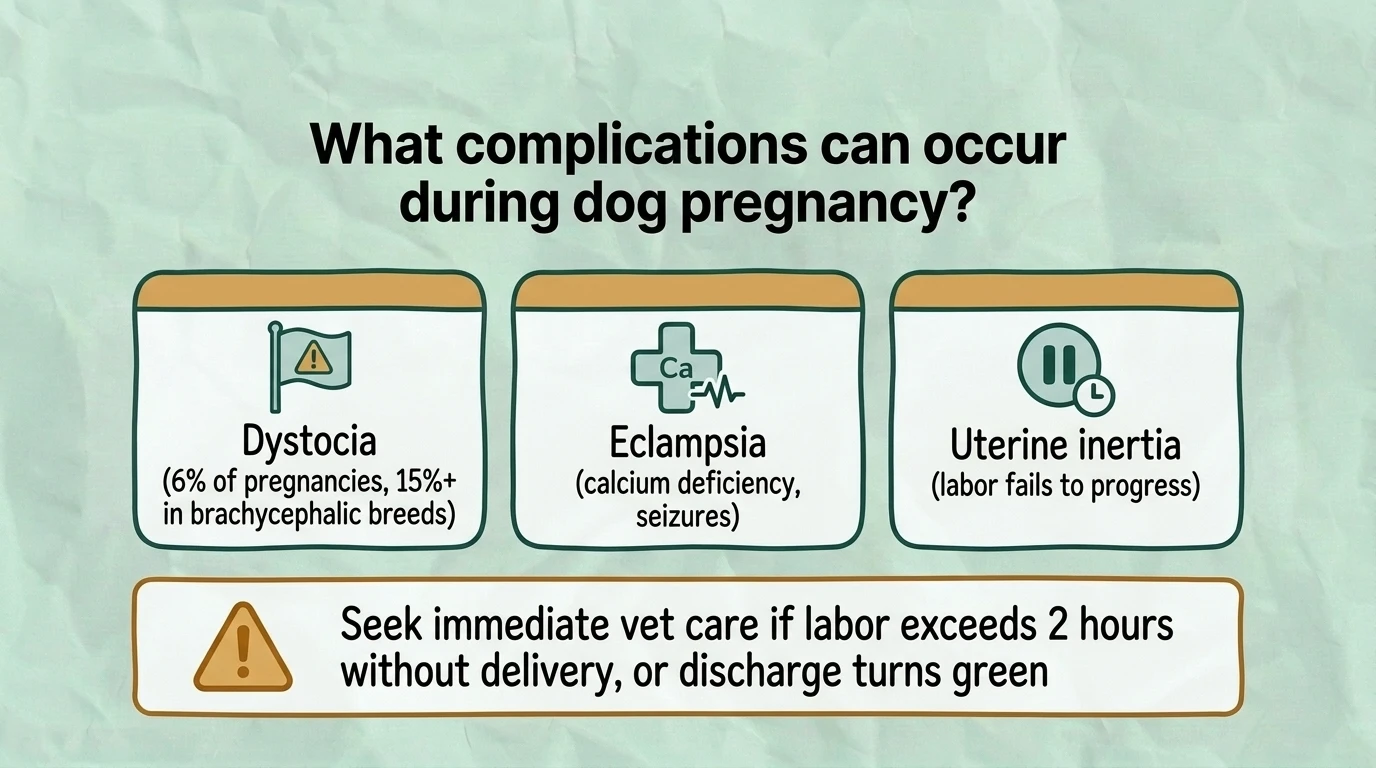
Dystocia affects 6% of canine pregnancies requiring surgical intervention according to Cornell University College of Veterinary Medicine 2023. Emergency complications include eclampsia (calcium deficiency causing seizures), uterine inertia (failure to progress in labor), and fetal malposition. Brachycephalic breeds experience dystocia rates exceeding 15% due to anatomical constraints. Warning signs requiring immediate veterinary care include labor exceeding 2 hours without puppy delivery, green discharge before first puppy, or maternal distress with weak contractions. Temperature remaining below 98°F for over 24 hours without labor onset indicates potential complications.
What else affects dog reproductive health beyond pregnancy?
Beyond calculating gestation periods, estrus cycles, false pregnancy affecting 50-75% of intact females, spaying timing, and breeding intervals impact canine reproductive health according to American Veterinary Medical Association 2023. Understanding heat cycle patterns and post-whelping recovery periods helps with optimal breeding management and maternal wellness.
How often do dogs go into heat?
Female dogs typically enter estrus (heat) every 6 months on average throughout their reproductive years. Most dogs experience their first heat cycle between 6-12 months of age. Small breeds often cycle more frequently at 4-5 month intervals, while giant breeds may cycle only once yearly. Understanding your dog's heat cycle timing helps predict optimal breeding windows for pregnancy planning.
What is false pregnancy in dogs?
False pregnancy (pseudopregnancy) occurs when unspayed female dogs display pregnancy symptoms without actual conception. This hormonal condition affects 50-75% of unspayed females at least once in their lifetime, according to Theriogenology Journal UC Davis 2022 research. Dogs may exhibit milk production, nesting behavior, and maternal aggression toward toys or objects. The condition typically resolves within 2-3 weeks without veterinary intervention. Hormonal fluctuations after the estrus cycle trigger these pregnancy-mimicking symptoms even when no breeding occurred.
When should you spay a dog after pregnancy?
Veterinarians recommend waiting 8 to 12 weeks after weaning puppies before spaying a dog post-pregnancy. This timeline allows the mammary tissue to return to normal size. Hormonal levels stabilize during this recovery period. The American Veterinary Medical Association 2023 states that spaying at 10 weeks post-weaning reduces surgical complications by 40% compared to earlier procedures. Schedule a pre-surgical veterinary examination to confirm the dog's body condition is appropriate for the procedure. Use a dog spay timing calculator to determine the optimal date based on your dog's whelping date and weaning schedule.
How do you calculate optimal breeding time?
Progesterone testing identifies optimal breeding time by measuring hormone levels, with breeding recommended 2-3 days after the LH surge when progesterone reaches 5-8 ng/mL according to the Theriogenology Journal UC Davis 2022. Veterinarians perform serial blood tests starting around day 5-7 of the estrus cycle. The LH surge occurs approximately 48 hours before ovulation. A dog breeding time calculator uses progesterone values to predict the fertile window with greater precision than visual heat signs alone.
What age is safe for first dog pregnancy?
Most dog breeds should be at least 2 years old before first breeding to allow for skeletal and hormonal maturity. The American Kennel Club Canine Health Foundation 2023 recommends waiting until females complete their second heat cycle. Giant breeds require 2.5 to 3 years for full physical development before pregnancy. Veterinary health clearances including hip, elbow, cardiac, and genetic testing must be completed before breeding. Toy breeds may physically mature by 18 months but benefit from waiting until 2 years. Breeding before skeletal maturity increases dystocia risk and developmental complications for both mother and puppies.
How many litters can a dog safely have?
The American Kennel Club recommends 4-6 litters maximum during a female dog's lifetime to maintain optimal health. The Kennel Club UK limits breeding to six litters total and sets a maximum age of eight years for final breeding. Responsible breeders allow minimum one-year intervals between litters to confirm complete physical recovery. Excessive breeding increases risks of uterine infections, mammary tumors, and calcium depletion according to the American Veterinary Medical Association 2023. Female dogs bred more frequently show higher rates of dystocia and postpartum complications. For detailed breeding protocols, consult our responsible dog breeding guide.