Raw Food Dog Calculator

By Dr Muhammad Adil Sardar · Reviewed by Dr. Muhammad Bilal

PetDog·Last updated August 5, 2026

Created by

Dr Muhammad Adil Sardar

Senior Veterinarian

I am Dr. Muhammad Adil Sardar, a practicing veterinarian specializing in avian and wildlife medicine, with hands-on clinical experience across Saudi Arabia, the United Arab Emirates, and Pakistan. My work centers on falcon medicine, conservation of endangered species, and the diagnostics and surgical care of birds and wild animals. Currently, I serve as a Veterinarian at the Alnayfa Group for Falcons in Riyadh, Saudi Arabia, where I handle routine and emergency examinations of falcons. My responsibilities include radiographic (X-ray) imaging, endoscopic procedures for internal diagnosis, laboratory sample collection and processing, and surgical interventions with full post-operative care. Before this, I worked with the International Fund for Houbara Conservation in Abu Dhabi, providing veterinary care for Houbara bustards, Stone-curlews, and Arabian bustards. There I carried out clinical diagnostics, medical and surgical treatments, and postmortem examinations to investigate mortality, while managing preventive health and quarantine programs and contributing to health-monitoring research and conservation initiatives. Earlier, at the Houbara Foundation International Pakistan in Lahore, I delivered comprehensive veterinary care for Houbara bustards, Blackbucks, Chinkaras, and Blue Bulls. My role covered health monitoring, fitness assessments for release suitability, wildlife release operations, rehabilitation of injured and sick animals, and the implementation of disease prevention and biosecurity protocols. Alongside my clinical career, I have worked since 2023 as a veterinary content writer, fact-checker, and reviewer, creating and verifying animal health content to ensure it stays accurate, reliable, and up to date. This combination of frontline clinical practice and content review allows me to translate complex veterinary knowledge into trustworthy, accessible information for my readers.

Reviewed by

Dr. Muhammad Bilal

Pet Practitioner And Surgeon

I'm Dr. Bilal, a veterinarian with a deep passion for animal health and welfare. I earned my Doctor of Veterinary Medicine (DVM) degree from the University of Veterinary and Animal Sciences (UVAS), Lahore, Pakistan, and later completed my MPhil in Surgery from UVAS to further enhance my knowledge and surgical expertise. My journey into veterinary medicine started long before my professional career. Growing up around animals, I developed a strong connection with them and was always fascinated by their behavior and well-being. I still remember helping care for an injured stray animal during my student years. Seeing its recovery firsthand reinforced my belief that veterinary medicine was the path I wanted to pursue for the rest of my life. Over the years, I have gained experience in diagnosing and treating a wide range of animal health conditions, performing surgical procedures, and providing preventive care. I believe that every animal deserves compassionate, high-quality medical attention, and I strive to ensure that both pets and their owners feel comfortable and supported throughout the treatment process. In addition to my clinical work, I enjoy educating pet owners about animal health, nutrition, disease prevention, and responsible pet care. I believe that informed owners play a vital role in helping animals live longer, healthier, and happier lives. Through my work and writing, my goal is to share reliable, practical, and easy-to-understand information that helps pet owners make better decisions for their animals. Whether I'm treating patients, conducting research, or creating educational content, I remain committed to improving animal welfare and promoting evidence-based veterinary care. Thank you for taking the time to learn more about me. I look forward to helping pet owners provide the best possible care for their beloved companions.

Raw Food Dog Calculator feature banner by 360 Calculator to determine daily raw food portions using the 2-3% body weight rule.
Calculate precise daily raw diet portions and ancestral feeding ratios for adult dogs, puppies, and active breeds.

Raw food dog calculators determine precise feeding amounts based on a dog's weight, activity level, and life stage. These calculators use the 2-3% body weight rule to calculate daily raw food portions, ensuring balanced nutrition without overfeeding or underfeeding.

How Does a Raw Food Dog Calculator Work?

A raw food dog calculator multiplies a dog's body weight by a percentage factor between 2% and 3% to determine daily food portions. Adult dogs require 2-2.5% of their body weight daily, while puppies need 2.5-3% for growth. The calculator adjusts portions based on activity level, age, metabolism rate, and health status. For example, a 50-pound adult dog with moderate activity requires 1-1.25 pounds of raw food daily. The calculation provides weight in pounds and ounces for accurate meal preparation.

What Percentages Should You Use for Different Dogs?
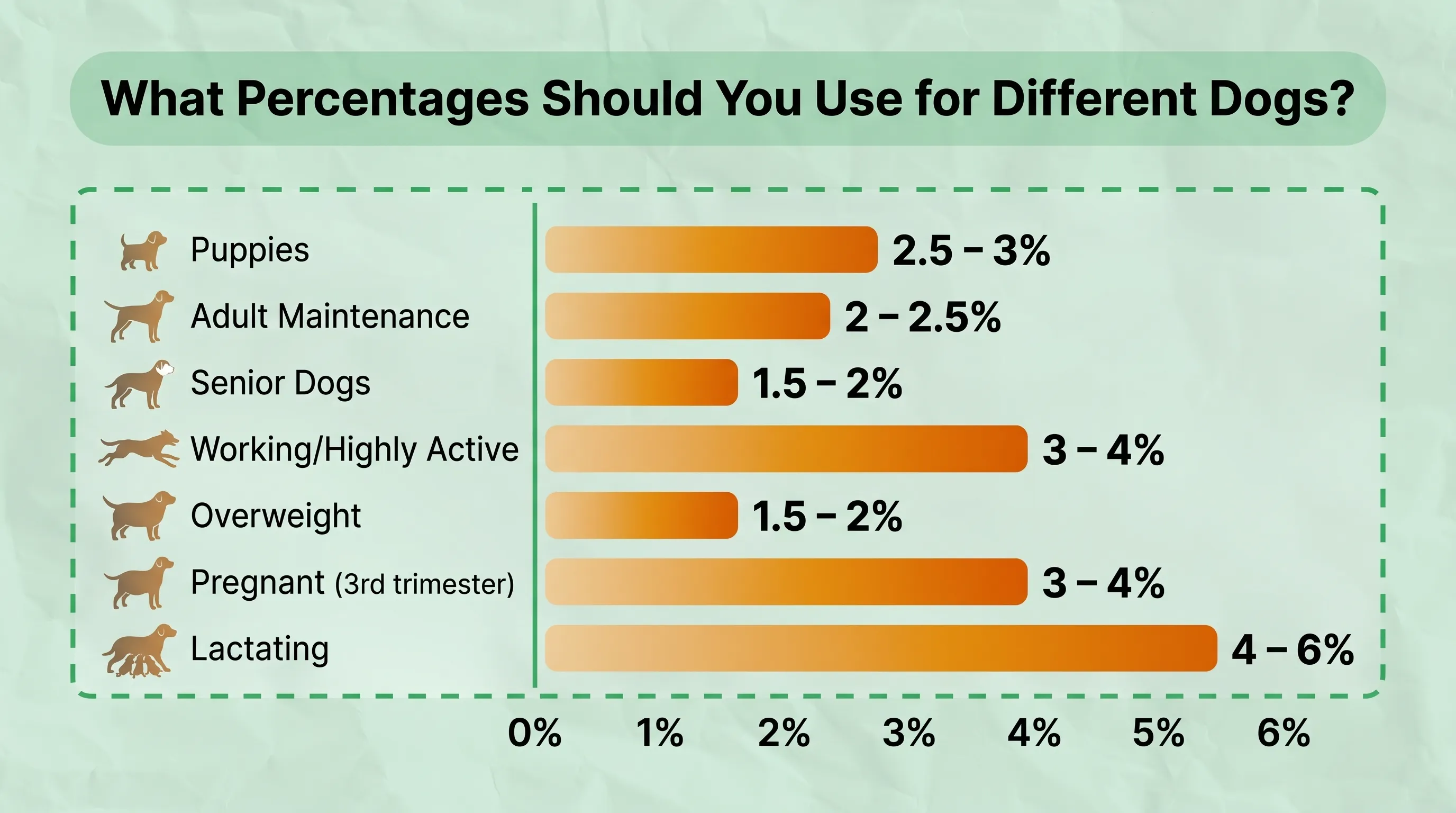
Chart showing recommended raw food feeding percentages for puppies, adult dogs, senior dogs, and highly active dogs based on body weight and life stage.

Adult dogs at maintenance weight consume 2-2.5% of body weight daily. Puppies under 12 months need 2.5-3% for development. Senior dogs over 7 years require 1.5-2% due to reduced metabolism. Working dogs and highly active breeds need 3-4% to maintain energy levels. Overweight dogs receive 1.5-2% for gradual weight loss. Pregnant dogs in third trimester require 3-4% to support fetal development. Lactating mothers need 4-6% based on litter size.

Activity Level Adjustments

Sedentary dogs need 2% of body weight. Moderately active dogs require 2.5%. Highly active dogs consume 3%. Working dogs demand 3-4%. These percentages prevent obesity in inactive dogs and maintain muscle mass in active dogs.

What Components Make Up a Raw Food Diet?
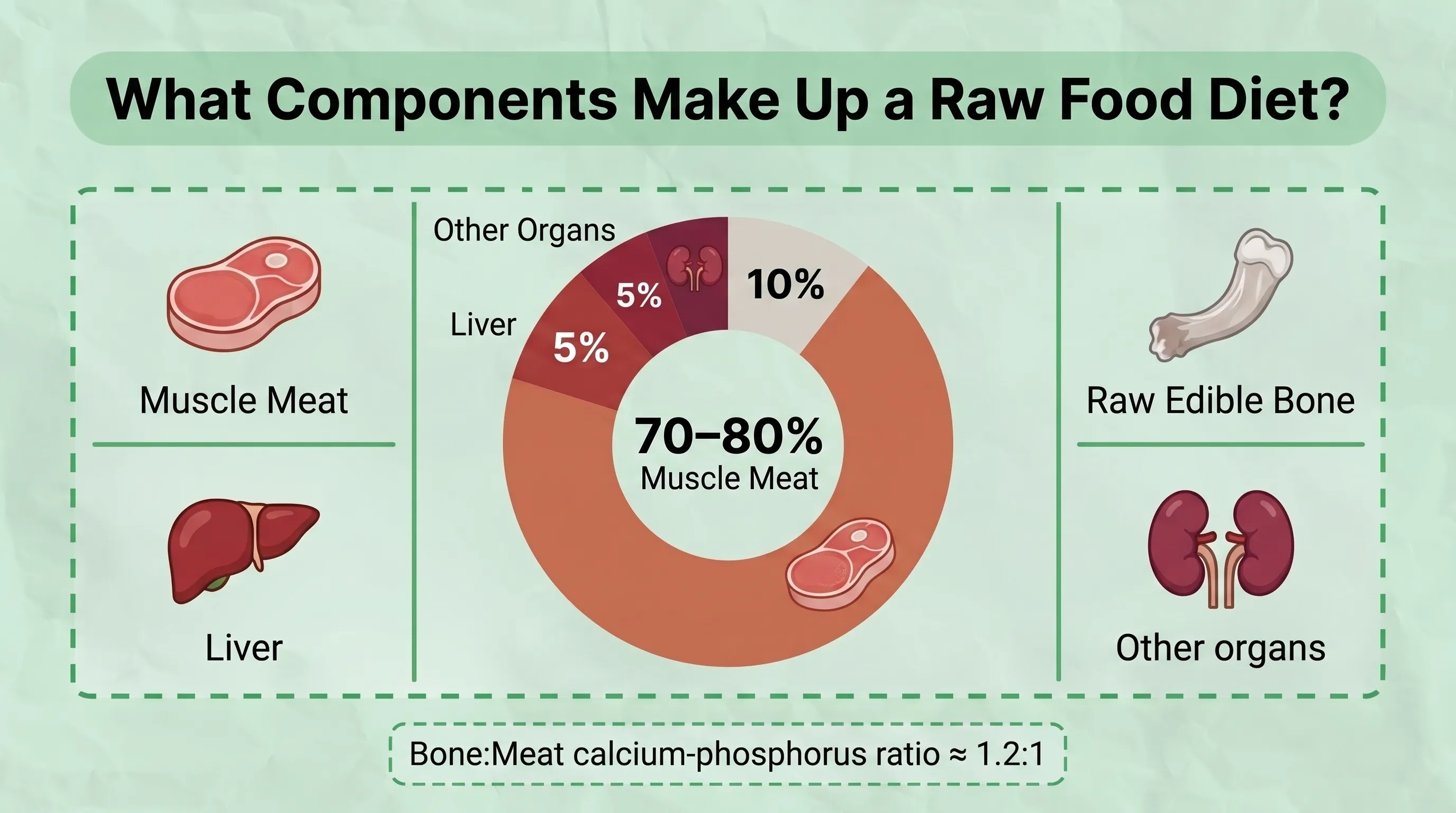
Diagram illustrating the main components of a balanced raw food diet for dogs, including muscle meat, raw edible bones, organs, vegetables, and optional supplements in appropriate proportions.

Raw dog food contains 70-80% muscle meat, 10% raw edible bone, 5% liver, and 5% other secreting organs. Muscle meat provides protein and amino acids. Raw bones supply calcium and phosphorus at a 1.2:1 ratio. Liver delivers vitamin A, B vitamins, iron, and copper. Other organs like kidney, spleen, and pancreas contribute essential nutrients. Some formulas include 10% vegetables for fiber and phytonutrients. This 80/10/10 ratio or 80/10/5/5 ratio creates nutritionally complete meals.

How Do You Calculate Portions for Multiple Meals?
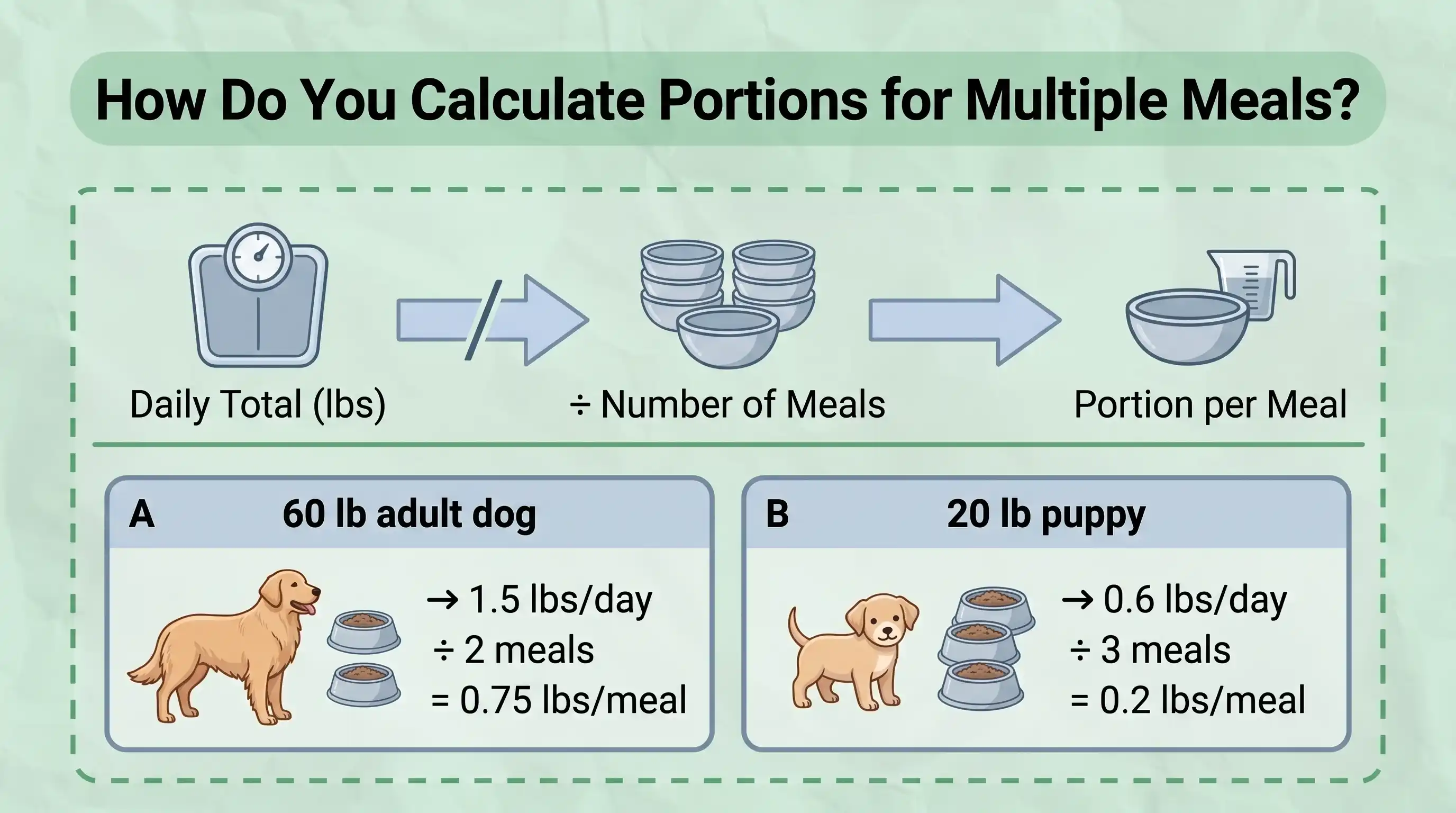
Infographic showing how to divide a dog's daily calorie or food requirement into multiple meals based on total daily intake, feeding schedule, and portion size.

Divide the daily total by feeding frequency to determine per-meal portions. Adult dogs typically eat two meals daily. Puppies under 6 months require three to four meals. A 60-pound dog needing 1.5 pounds daily receives 0.75 pounds per meal when fed twice. A 20-pound puppy consuming 0.6 pounds daily gets 0.2 pounds three times daily. Splitting meals improves digestion, prevents bloat, and maintains stable blood sugar levels throughout the day.

What Factors Require Portion Adjustments?
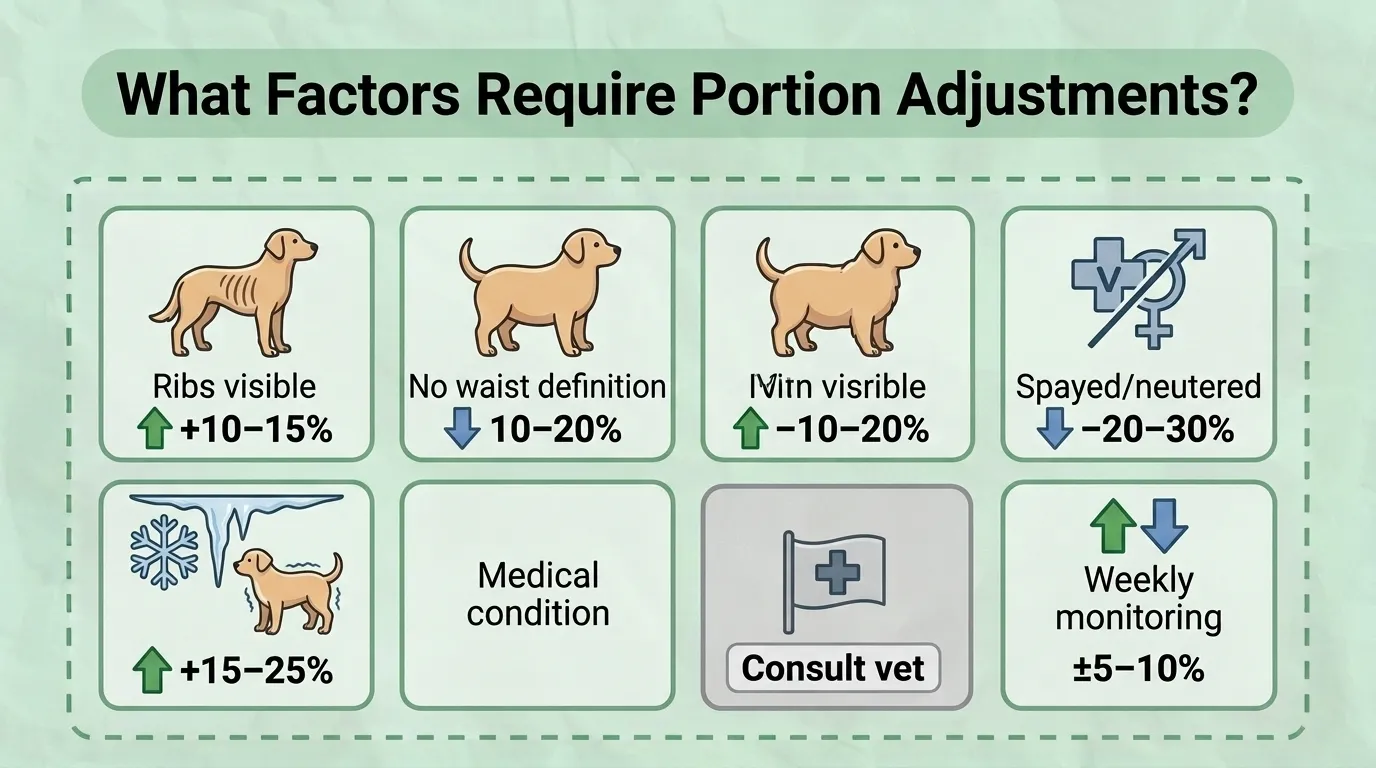
Infographic showing the key factors that affect raw dog food portion sizes, including age, body weight, activity level, body condition, health status, metabolism, and life stage.

Body condition score determines portion increases or decreases. Dogs with visible ribs need 10-15% more food. Dogs with no waist definition require 10-20% reduction. Temperature affects requirements: dogs in cold climates need 15-25% more calories. Spayed or neutered dogs have 20-30% lower metabolic rates. Medical conditions like diabetes or thyroid disorders demand veterinary-supervised adjustments. Monitor weight weekly and adjust portions by 5-10% increments until ideal weight stabilizes.

How Do You Transition to Calculated Raw Portions?
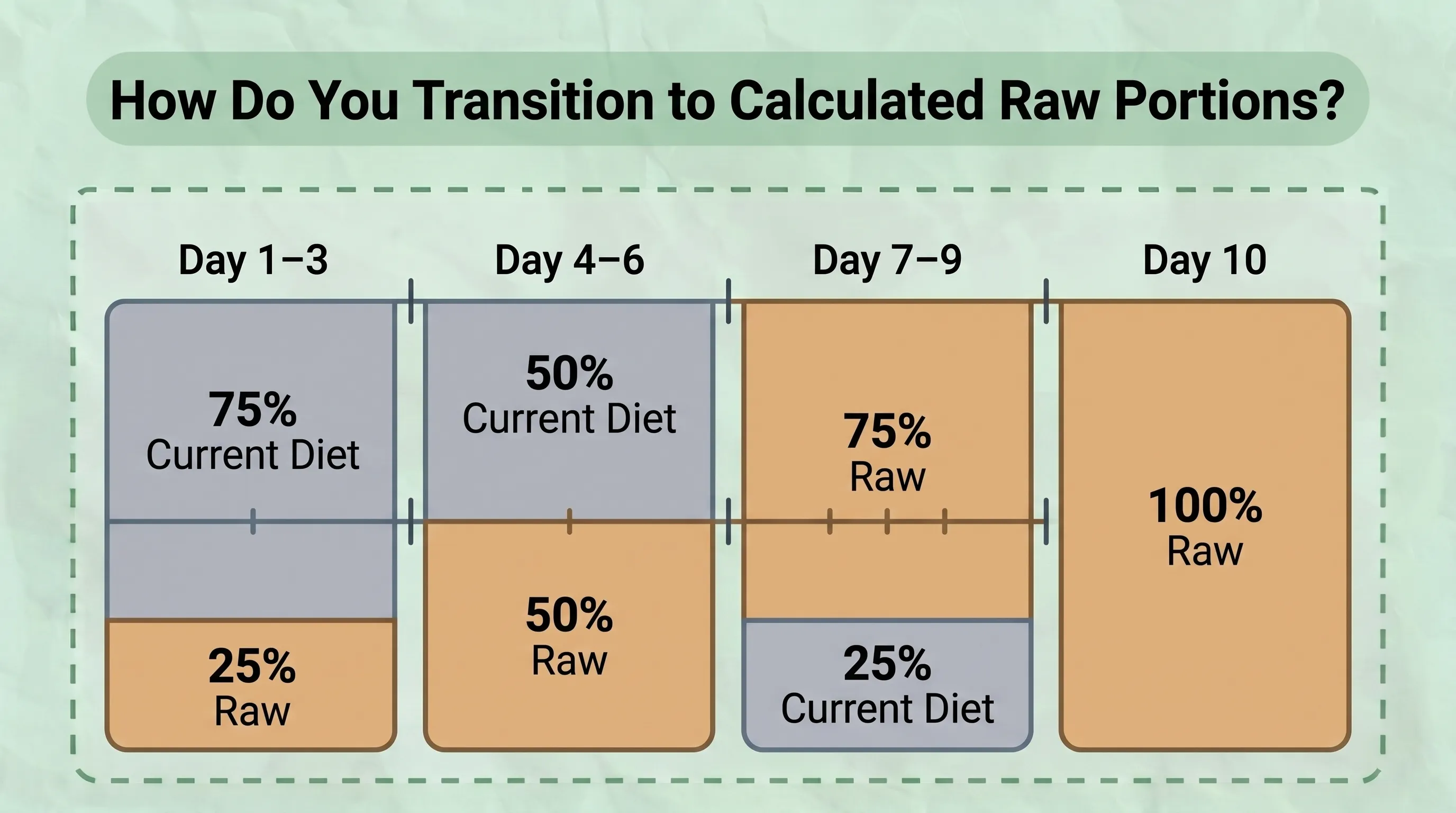
Step-by-step infographic showing how to transition a dog from its current diet to calculated raw food portions by gradually increasing raw meals while monitoring portion sizes and digestive health.

Begin transition with 25% raw food and 75% current diet for three days. Increase to 50/50 ratio for three days. Move to 75% raw for three days. Complete transition to 100% raw by day 10. This gradual method prevents digestive upset, allows enzyme adjustment, and reduces detoxification symptoms. Fast dogs for 12 hours before first raw meal. Start with simple proteins like chicken or turkey before introducing beef, fish, or organ meats.

Leave Your Feedback

Help us improve this calculator

Rating

Recent Feedback

No feedback yet.